Researcher Spotlight – Sam Holberg
2025-26 Global Change Research Fellow
PhD Student, Department of Biological and Agricultural Engineering, North Carolina State University
Advisor: Dr. Celso Castro-Bolinaga
About You
What do you study?
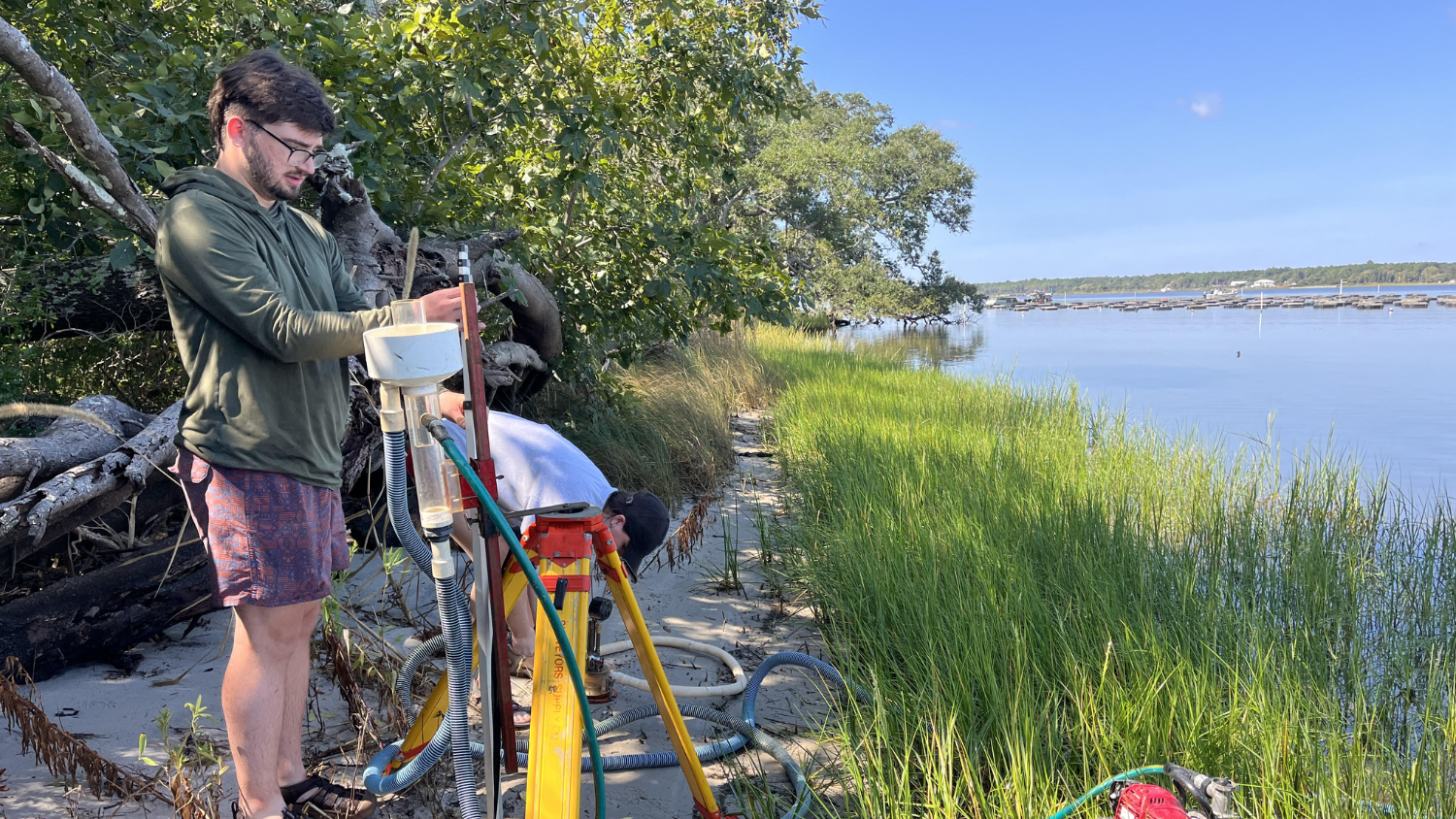
I study how small-scale variability in sediment properties influences large-scale morphodynamics (the movement and reshaping of Earth’s surface). My current project investigates how oyster farms alter sediment composition and reduce water velocity, thereby affecting shoreline erosion potential. I’m also studying how extreme storm events, such as hurricanes, change morphodynamics in newly formed tidal inlets. I’m interested in how sediment characteristics, such as grain size, shell hash, and organic matter content, etc., govern large-scale tidal inlet morphology. By integrating field-measured sediment variability into numerical models, I seek to improve our ability to accurately simulate and predict the evolution of coastal systems.
What influenced you to go into this field of study?
I have always been interested in coastal systems, as I grew up going to my grandparents in coastal South Carolina. In my junior year of undergrad, I had a really transformative experience of being an engineering intern for Seabrook Island, South Carolina. There, I learned firsthand the engineering challenges facing coastal communities, such as beach nourishment, tidal flooding, and inlet migration. After that experience, I realized that coastal engineering is an in-demand career option that would have a huge impact on communities. This experience, along with a background in undergraduate research, influenced my decision to pursue graduate school.
What do you think is the most pressing issue related to global change?
– What do you think is the most pressing issue related to global change? In my opinion, the most pressing issue related to global change is the disconnect between climate science and communities. Researchers have a strong understanding of what 2+°C of warming entails, but there remains a gap between scientific urgency and public perception. Sea-level rise, coastal erosion, tidal flooding, and the increasing frequency of extreme storms will affect nearly 40% of the world’s population living near coastlines. Communicating these global change impacts in ways that resonate with communities and encouraging action will be critical to improving resilience and bridging the divide between research and action.
About Your Research
What results are you finding?
I am still in the early phases of my PhD research, so I don’t have many findings yet. The most important thing that I’ve learned is to just be flexible. Working in the environmental field, when collecting data, not everything will go exactly as planned. It’s important to be flexible and go with the flow (literally going with the flow) when you’re in the field collecting data.
Who will benefit from your research?
I hope that coastal stakeholders and management agencies can benefit from my research. Whether that be aquaculture stakeholders for my oyster farm project or coastal communities with my work around hurricane inlet breaching dynamics.
How would you describe your research to a 3rd grader?
I look at how water or storms move sand and mud around. I can help people understand how to keep beaches and coastlines safe for the future.
About Your Global Change Research Fellow Experience
How do you expect the SE CASC Global Change Research Fellows Program to impact you and your work?
The interdisciplinary aspect of the GCRF program is what I expect to have the biggest impact on my work. As an engineer, we are often stuck in our circles of engineers. Engaging with researchers from other scientific disciplines will be an eye-opening experience that challenges me to think beyond my field and approach problems from new perspectives.
What advice would you give to a student that is interested in getting involved in your field?
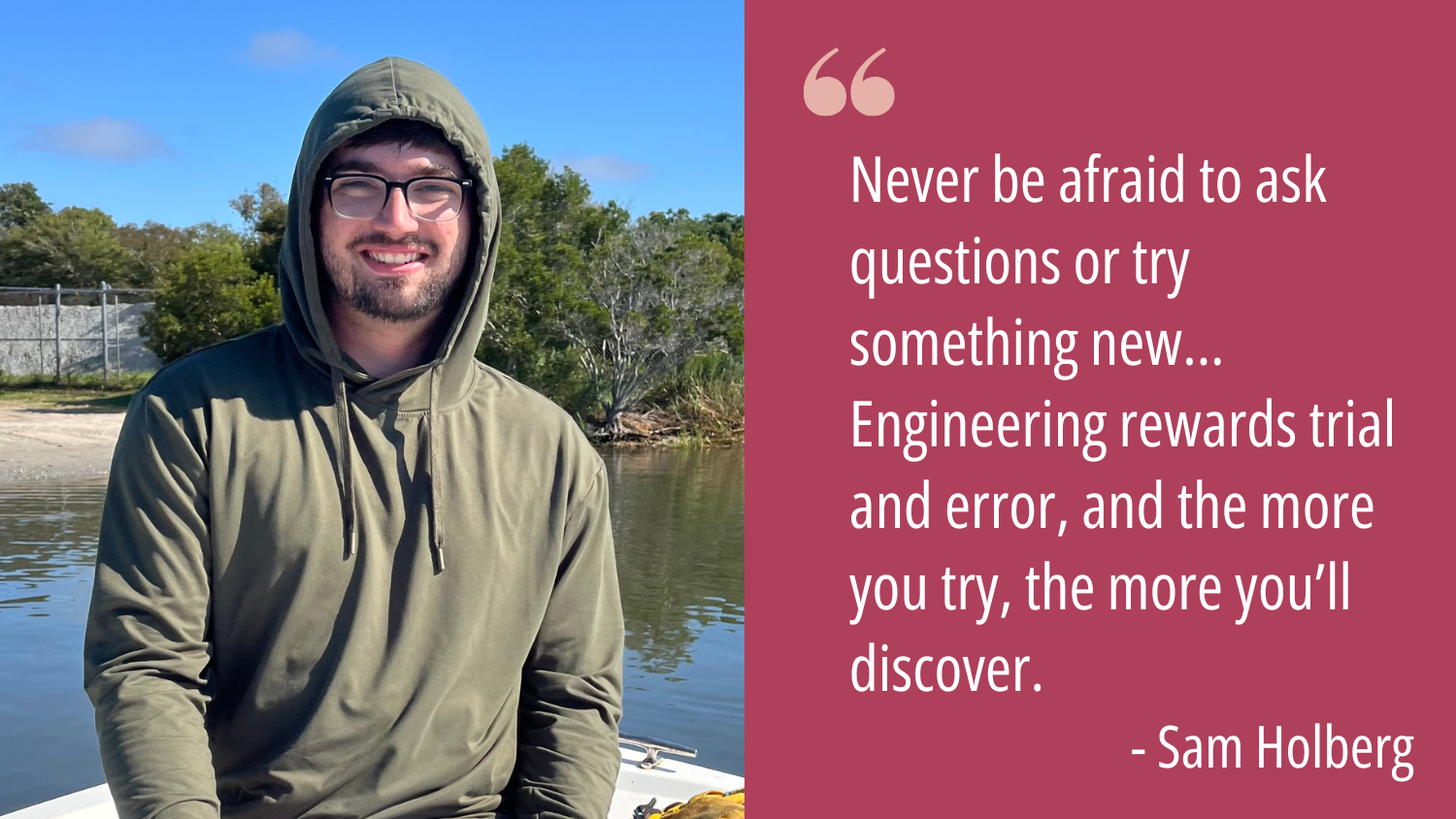
My advice would be to never be afraid to ask questions or try something new. Whether it’s going out on a boat to collect measurements, getting a little muddy while taking sediment samples, or tackling partial derivatives to better understand a coastal model, each experience offers something valuable. Engineering rewards trial and error, and the more you try, the more you’ll discover.
What has been the most rewarding part or your favorite part of being a SE CASC Global Change Research Fellow?
The most rewarding part of the SE CASC GCRF program so far has been the weekly meetings. The weekly meetings emphasize interdisciplinary research and provide training I wouldn’t get from a traditional class at my university. Taking what I have learned from each week and then reflecting on my research has been rewarding as the insights from those discussions often shift how I think about the bigger picture of my work.
Learn more about the Southeast Climate Adaptation Science Center’s Global Change Research Fellows program.
- Categories: