Recapping the 2025 Field Intensive
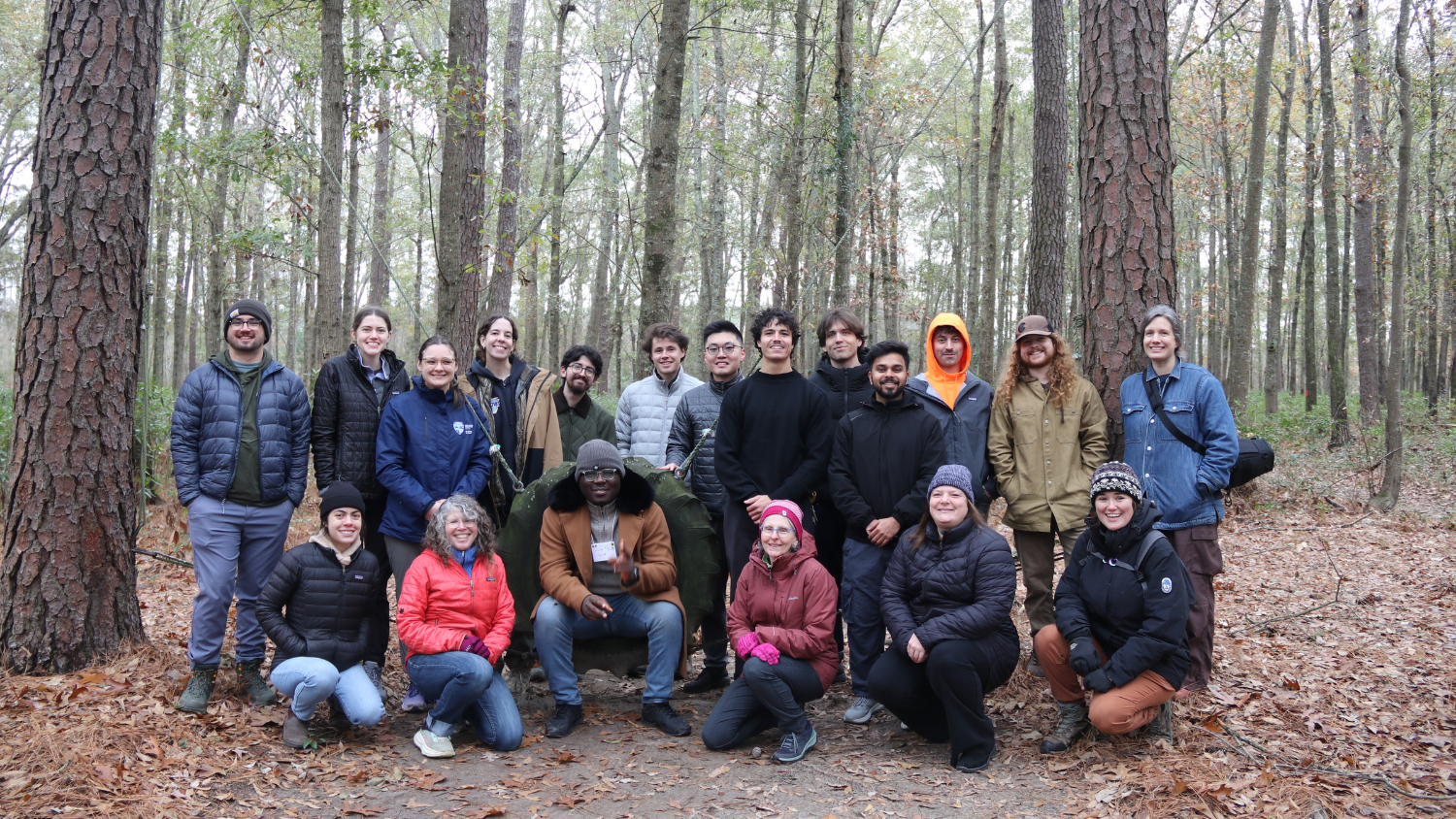
The 2025-26 Global Change Research Fellows have been hard at work all semester and convened at the first ever winter-version of the Climate Adaptation Science Field Intensive in the Albemarle Sound of North Carolina at the Eastern 4-H Center. The six-day retreat included an expert panel, team science workshops, and the chance to meet partners and scientists in the field throughout the region. Fellows learned from speakers from across a wide array of partner institutions.
The week started at the Eastern 4-H Center where Jenn Standish led the fellows through a team building course full of fun challenges that strengthened their communication and teamwork skills.

The fellows then met with their team science groups to continue the efforts they had been building all semester with in-person work sessions. (something about the work they are doing) The team science projects this semester include (topics).
Then Stacey Feken and Natalie Rodriguez Ivey from the Albemarle-Pamlico National Estuary Partnership presented and answered student questions about their on-the-ground work with communities in the Albemarle Peninsula.

In the evening, Joe Landino and Fix Cain offered a local and tribal perspective on the stories of this place, outlining changes to the landscape and people spanning the past 10,000+ years.
The following day, the fellows headed to Palmetto Peartree Preserve to meet with Marcelo Ardon, from North Carolina State University, to learn about sea level rise and salinization processes that cause ghost forests. They got an introduction to the participatory science project that has been monitoring these ghost forests. They got to try their hands at participating themselves by donning some waders and measuring salinity, tree density, and the distance of the ghost trees from the shore.

The next day, the fellows met with Robbie Fearn from the North Carolina Audubon Society at Pine Island Sanctuary. As they walked the island, they learned about its history of habitat conservation, the living shoreline and how they’re planning to add Christmas trees to it, and saw many of the animals that call it home.

Next, they headed to another living shoreline with Sandy Cross, planning and permits manager for the town of Duck, to see how the structure has improved flooding on their roadways.
The fellows spent the rest of the afternoon at Jockey’s Ridge State Park, learning about park management while walking the dunes with park ranger Austin Paul, and Margaux Kerr, Sara Hallas, and Victoria Blakey from the North Carolina Coastal Federation. Federation staff introduced their oyster shell recycling program and discussed the features of the living shoreline installed on the Park’s sound side.
After a beautiful sunset on the shore, they headed to a local event, OBX Green Drinks at Waveriders Coffee, Deli, and Market to hear from wildlife photographer Eve Turek.

The following day they headed to the Red Wolf Conservation Center where Katerina Ramos shared the ecological and social challenges in red wolf conservation, before showing them the two red wolves they have in captivity for breeding. They also heard from Caitlin Brett from the North Carolina Wildlife Resources Commission about managing furbearers in the state.
Then they headed to Edenton to hear from Chris Osburn, from North Carolina State University, and Colleen Karl from the Chowan Edenton Environmental Group to hear about their community monitoring efforts of water quality and harmful algal blooms. They also got a chance to see one of the monitoring sites at Bennetts Mill Pond.
The final destination was Bertie Beach where Beth Roach, from the Sierra Club and Alliance of Native Seedkeepers, and Fix Cain explained some of the climate impacts and adaptation challenges of tribal communities in the area.

To close the week out, the fellows shared their creative communications projects with each other, which showcased the bonds they formed, the various sites they visited, and the ecological challenges of the region through varied forms such as a children’s picture book, a video retrospective, and songs!
A fellow shared that “(after the Field Intensive) I understand that being a graduate student is not only about coding, attending classes, reading papers, and managing stress; it’s also about pursuing adventure, getting excited, asking questions, and expressing your feelings about what you have learned.”

We want to extend an enormous thank you to the Eastern 4-H Center for hosting us throughout the week. We’d also like to thank all of our incredible speakers and partners for sharing their valuable time by taking us into the field.

- Categories: