
Postdoctoral Lightning Talks: Research Updates
Wednesday, Oct. 21 at 1:00pm ET
Join us for two lightning talks by our postdoctoral research team; Hannah Desrochers, and Sierra Perez. They will detail updates on their projects.
Abstracts:
Hannah Desrochers will share her and Diane J.E. Sturgeon’s work: Wildlife managers need timely syntheses of a rapidly growing climate adaptation literature, but traditional screening is slow and resource-intensive. This talk presents a validated protocol for using large language models (LLMs) to accelerate that work. We replicated and extended the LeDee et al. (2021) climate adaptation review, expanding coverage through 2025 to 1,596 articles, and used that human-driven review as a gold standard to test a two-stage AI screening protocol using Claude (Anthropic). The best-performing prompts reached a balanced accuracy of 0.85 for abstract-level exclusion and substantial agreement with human coders in identifying actionable management recommendations, while cutting screening time by roughly 83%. The results suggest that expert-reviewed, LLM-assisted screening is a practical tool for evidence synthesis and for narrowing the persistent gap between research and management.
Sierra Perez will share her work: Climate change is increasing the probability of co-occurring climatic stressors. Combined stressors can result in complex outcomes, including antagonistic (when the combined effect is less than the sum of individual effects) or synergistic effects (combined effect is more than the sum). The Southeastern U.S. is a hotspot of floristic diversity, and the region is experiencing shifts to historical precipitation conditions and increases in heatwave events. Via synthesizing long-term records of understory plant abundances and climatic conditions from the past two decades, my work highlights the variability—in effect direction, magnitude, and interaction type—of plant species’ responses to multiple climatic stressors. These findings lend support for species’ traits and phylogeny providing insight into species’ sensitivities to interacting precipitation and heat extremes while underscoring the context dependency of these outcomes. Because species traits and phylogeny provided some predictive insight into species sensitivities, this could aid land managers in anticipating community shifts and proactively guiding recovery following events.
Speakers:
Hannah Desrochers
Hannah Desrochers (“Dare-oh-shay”) earned her PhD at NC State University, on the intersection of social science and natural resource management, specifically looking at the human dimensions of urban deer management in North Carolina. Hannah is currently working for the Southeast Climate Adaptation Science Center as a post-doctoral research scholar, synthesizing climate adaptation science and practice to improve accessibility of resources for natural resource managers in the Southeast and US Caribbean.

Sierra Perez
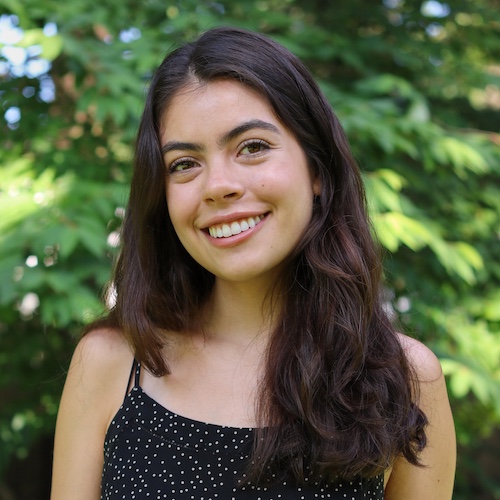
Sierra received her PhD in Evolution, Ecology, and Behavior from Indiana University and her MS in Ecology, Evolution, and Conservation Biology from University of Illinois, Urbana-Champaign. She is now a postdoctoral researcher at SE CASC and NC State. Her research explores how plants and their associated ecosystem functions are being impacted by human-driven global changes and the attributes that promote resilience to these changes. She is synthesizing the impacts of extreme and compounding climate events on plant species throughout the Southeast.
Watch their last lightning talks
- Categories: