
Climate Change Implications for the Conservation of Amphibians in Tropical Environments
Project Information
Project Completion: August 2020
This Project is Phase I of Strategic Habitat Conservation and Adaptive Strategies for the Conservation of Coqui Frogs in Puerto Rico
Implements Science Plan Theme: 4
Principal Investigator(s):
Jaime Collazo, Department of Applied Ecology and USGS Coop Unit, NC State University
Co-Investigator(s):
Adam Terando, USGS Southeast Climate Science Center
Krishna Pacifici, Department of Forestry and Environmental Resources, NC State University
Jared Bowden, Institute of the Environment, UNC – Chapel Hill
Key Points
- Informed action plan for potentially threatened or endangered frog species
- Studied a group of culturally important frogs
- Studied the frogs’ potential to adapt to climate change and impacts of small changes in environmental conditions
Overview
Climate and land use change is affecting tropical island ecosystems. Species like migratory birds and threatened and endangered species are facing new risks. These islands are more vulnerable than many temperate regions for several reasons. The limited size of islands means that many species that only exist in small areas of habitat. Projections also expect tropical environments to experience greater changes in temperature. Tropical island communities want to conserve their natural resources and ecosystems. But a lack of scientific information makes it hard to make conservation decisions.
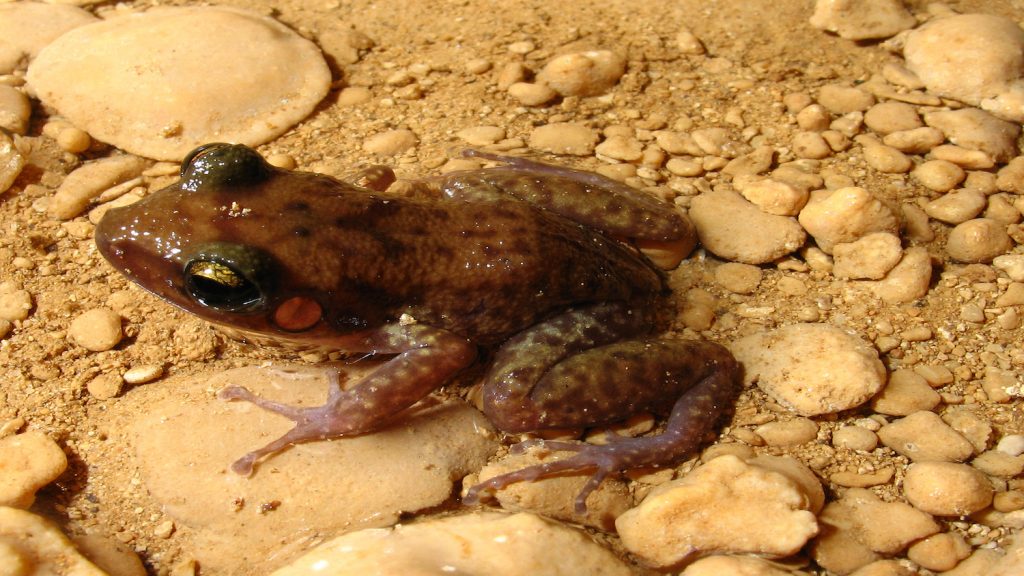
The U.S. Fish and Wildlife Service and the Puerto Rico Department of Natural and Environmental Resources are developing a plan of action to protect 12 species of coqui frogs (genus Eleutherodactylus). These frogs are currently at risk of being listed as threatened or endangered. This status would give the frogs more protections under the Endangered Species Act. There are two possible adaptation strategies to help these frogs. We could move the frogs to a new, unoccupied habitat, and we could also find climate resilient habitats. It is important that a habitat can support the frogs both in current and in future conditions.
This project studied 4 representative coqui species to provide information for the plan of action. We studied how small changes in local environmental conditions impact a frog population’s success. We found that higher moisture levels in a habitat made 3 out of the 4 species studied more abundant. Conditions like a high relative humidity also affected some species’ reproductive success. We also found that frogs were not affected by Hurricane Maria in September 2017. This is possibly because fallen debris creates increased food and shelter. Our findings help to assess habitat suitability and inform timing for managed translocations.
This project incorporated results from an earlier SE CASC project, Modeling Future Temperature and Precipitation for Puerto Rico and the U.S. Caribbean, that laid the foundation for more reliable climate change information for this region by producing dynamically downscaled climate projections.
More Information
- View a USGS presentation by Dr. Jaime Collazo and Dr. Adam Terando about information learned from this project.
- View a presentation by Adam Terando describing elements of the project: