Forests of the Future: Integrated Assessment of Climate Change and Ecosystem Diversity
Project Information
Project Timeline: September 2017. This project is now completed.
Implements Science Theme: 4: Ecological research and modeling,
Principal Investigator:
Rob Dunn, Department of Applied Ecology, NC State University
Cooperators:
Lauren Nichols, North Carolina State University
Clint Penick, North Carolina State University
Key Points
- Created projections for species success in future warming scenarios
- Brought together a diverse group of scientists to aid the project
- Built on a large-scale project, contributing to the total amount of data available
Overview
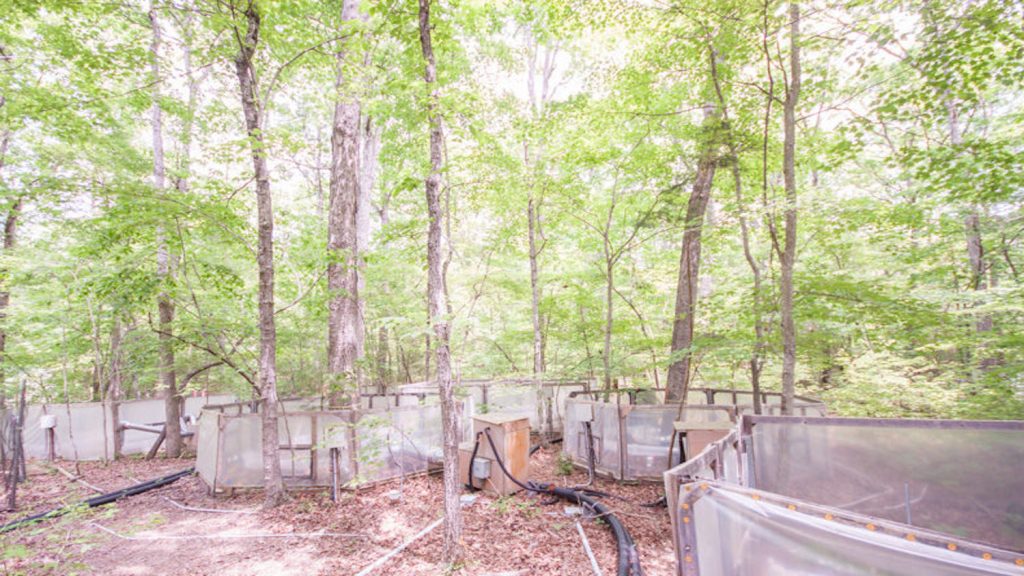
This project built on the largest and longest-running experimental warming of a forest. We brought dozens of scientists from across the world to collect data with us. We studied how bacteria, fungi, herbivores, plant pathogens, insects and other groups respond to warming.
We found that warming had major impacts on ecosystems in both the North and Southeast US. But, the types of impacts were different in the north and south. They were also different based on the species. Warming had the greatest impact on phenology. The timing of natural events, like migration patterns, were shifting with warming. There were similar levels of impacts on plants, microbes and animals. Some organisms benefited from warming, while others were harmed. Warming affected above-ground responses more than below-ground responses. We now have projections for whole groups of organisms most likely to thrive or fail in response to warming temperatures.
More Information
- See more information about this project as part of the Rob Dunn Lab Group.