
Recording: Postdoctoral Lightning Talks

Wednesday, Jan. 21 at 1:00pm ET
Join us for two lightning talks by our postdoctoral research team; Diane Sturgeon, Hannah Desrochers, and Sierra Perez. They will detail their projects and seek your comments, input, and ideas.
Abstracts:
Diane J.E. Sturgeon and Hannah Desrochers’ work aims to synthesize the current state of climate adaptation science and management in the Southeast and US Caribbean. The ultimate goal is to improve understanding and accessibility of the available climate adaptation science in the region. With their team at SE CASC, Diane and Hannah are currently seeking to identify priority topics from on-the-ground managers and decision-makers to summarize for this project. They want to develop tools and visualizations that are useful and actually used in adaptation planning and implementation. Their project also seeks to test AI as a tool to accelerate literature screening without compromising scientific standards. Management decisions require current scientific evidence, but traditional literature reviews take 6-12 months. For rapidly changing topics like climate adaptation, this delay means decisions rely on outdated evidence. Using their climate adaptation literature review for the Southeastern US, Puerto Rico, and US Virgin Islands, they are working to identify a framework for using AI to accelerate literature reviews.
Sierra Perez is working on how climate change is amplifying the frequency and intensity of climatic extremes, as well as increasing the probability of co-occurring climatic stressors. Plants underlie ecosystem functioning and services in terrestrial ecosystems, and in particular, the southeastern United States is a hotspot for floristic diversity. Therefore, it is critical to understand how co-occurring climatic factors are interacting to impact plant performance throughout the region. Leveraging existing long-term datasets, Sierra is synthesizing the responses of plant species across the Southeast to interacting precipitation and temperature anomalies. This work aims to understand broad trends in plant species’ responses to interacting climatic extremes and to gain predictive insight into the factors influencing species’ sensitivities.
Speakers:
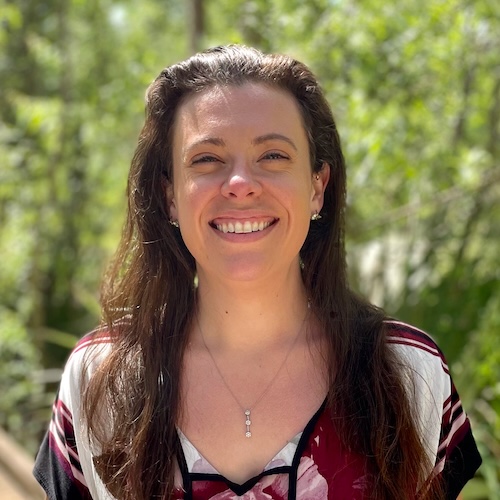
Hannah Desrochers
Hannah Desrochers (“Dare-oh-shay”) earned her PhD at NC State University, on the intersection of social science and natural resource management, specifically looking at the human dimensions of urban deer management in North Carolina. Hannah is currently working for the Southeast Climate Adaptation Science Center as a post-doctoral research scholar, synthesizing climate adaptation science and practice to improve accessibility of resources for natural resource managers in the Southeast and US Caribbean.

Diane Sturgeon
Diane J.E. Sturgeon is a postdoc and ORISE fellow with the SE CASC, working together on synthesizing climate adaptation information to support practitioners and decision-makers. Her background includes understanding how people engage with environmental challenges and science communication. Her interest is in making research accessible and useful for all stakeholder groups. One thing working in human dimensions has reinforced for her: good science requires listening as much as researching.
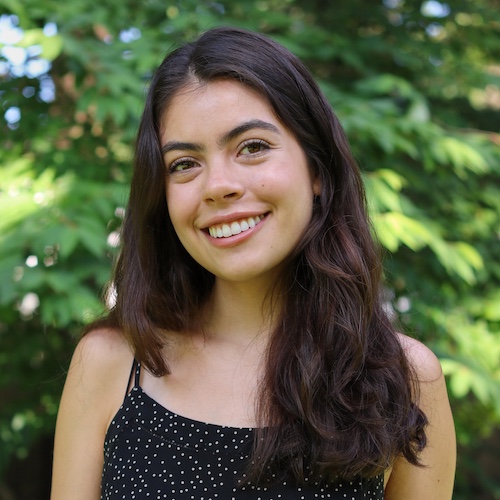
Sierra Perez
Sierra received her PhD in Evolution, Ecology, and Behavior from Indiana University and her MS in Ecology, Evolution, and Conservation Biology from University of Illinois, Urbana-Champaign. She is now a postdoctoral researcher at SE CASC and NC State. Her research explores how plants and their associated ecosystem functions are being impacted by human-driven global changes and the attributes that promote resilience to these changes. She is synthesizing the impacts of extreme and compounding climate events on plant species throughout the Southeast.
- Categories: