Researcher Spotlight – Alex Brown
2026-27 Global Change Research Fellow
PhD Student, College of Agriculture and Life Science and College of Engineering, North Carolina State University
Advisor: Dr. Daniela Jones
About You
What do you study?
I study how agricultural waste, such as undesirable or surplus sweet potatoes, can be upcycled into useful products and applications. My research focuses on finding ways to add value to agricultural materials that might otherwise be discarded, while also exploring more sustainable approaches to agriculture.
What influenced you to go into this field of study?
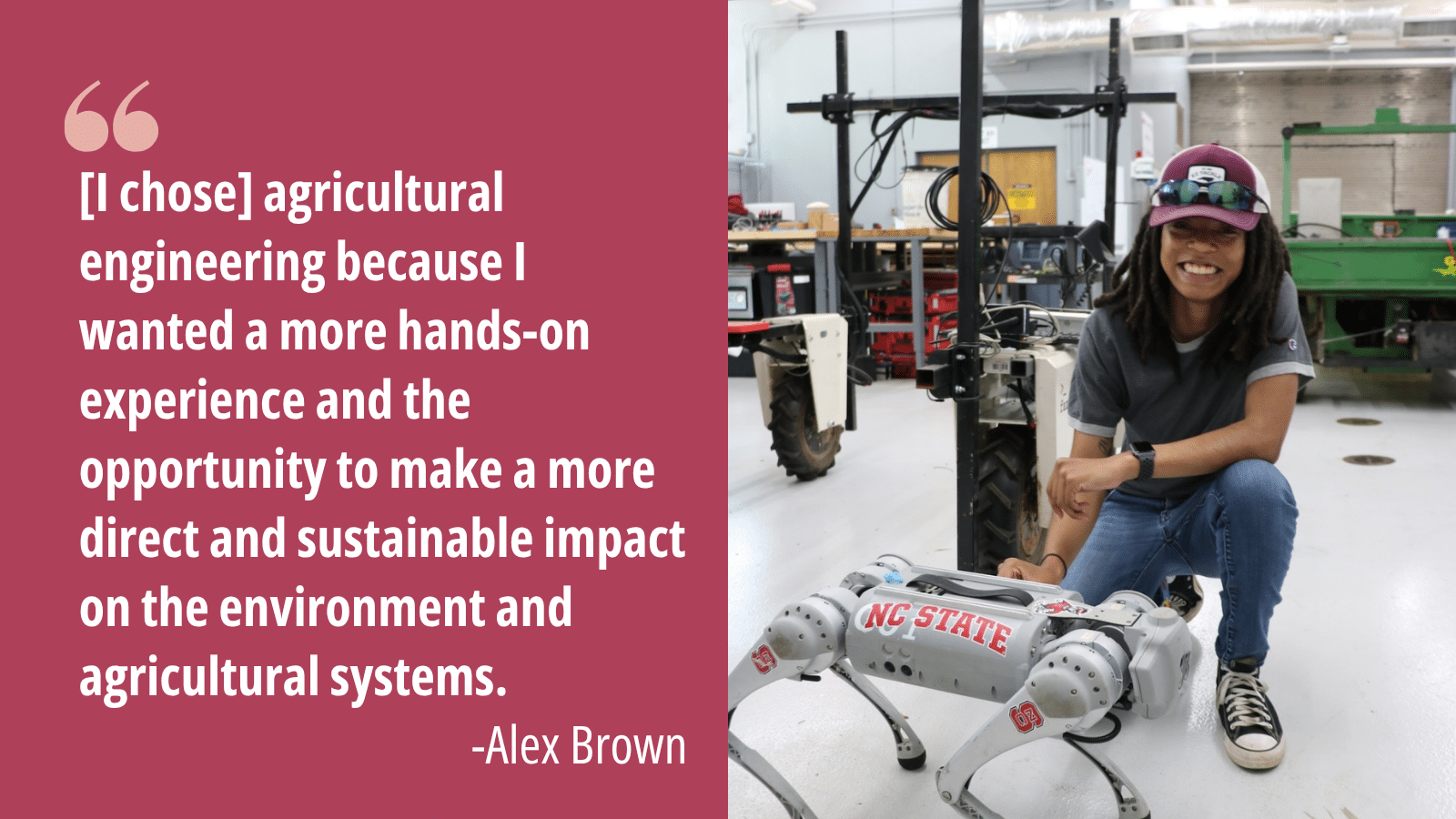
I became interested in agricultural engineering somewhat by accident. I grew up in a rural area surrounded by growers, farmers, and their families, but I was not familiar with agricultural engineering as a field. I originally studied mechanical engineering but eventually transitioned to agricultural engineering because I wanted a more hands-on experience and the opportunity to make a more direct and sustainable impact on the environment and agricultural systems.
What do you think is the most pressing issue related to global change?
I think there are several major issues associated with global change, but one of the most pressing is our ability to continue producing food as environmental conditions change. With increasing temperatures and changing weather patterns, growers are facing greater challenges, including drought, crop diseases, and unpredictable growing conditions.
We are already seeing some of the effects of changing climate patterns and extreme weather events. As these conditions continue to shift, it will become increasingly important to develop agricultural systems and technologies that can help growers adapt while maintaining a reliable food supply.
About Your Research
What results are you finding
I have not yet started collecting data for my current research. However, during my master’s thesis, I investigated how different environmental storage conditions affected hemp hurd degradation and color. I also studied sweet potato root development across different propagation tray sizes and developed a computer program that uses images taken with a mobile phone to measure sweet potato root length.
For the hemp hurd project, I found that different storage conditions had a significant effect on color. Both projects were especially interesting because they allowed me to work with a variety of equipment and combine hands-on experimentation with data analysis and technology. They were also a great opportunity to explore practical ways that engineering can be applied to agricultural challenges.
Who will benefit from your research?
From my current research, sweet potato growers will primarily benefit because it could provide new ways to use sweet potatoes that might otherwise be considered undesirable or go to waste. This could help growers reduce waste and potentially create additional value from their crops. In the long term, consumers and the environment could also benefit from finding more sustainable ways to use agricultural waste.
How would you describe your research to a 3rd grader?
Have you ever seen a funny-looking potato at the grocery store and wondered, “Why don’t they sell this one?” I study what we can do with those potatoes and other farm leftovers so they don’t have to go to waste. I look for ways to turn things farmers can’t sell into something useful.
About Your Global Change Research Fellow Experience
How do you expect the SE CASC Global Change Research Fellows Program to impact you and your work?
I believe that SE CASC will help me increase my ability to communicate my research more broadly. With so many different individuals from different disciplines recovering feedback on different topics will definitely set me up for success in the future.
What advice would you give to a student that is interested in getting involved in your field?
Don’t be afraid to ask questions and get involved. The initial step is always the scariest however once you start you begin to build your understanding of the work and applying what you have learned.
What has been the most rewarding part or your favorite part of being a SE CASC Global Change Research Fellow?
Being able to hear different perspectives in our lectures and in our small teams project. I believe that the fellows, guest speakers, and instructors have helped me gain understanding of different topics and are giving me experience working with topics outside of my expertise which is really exciting.
Is there anything else you would like to share?
Yeah, enjoy some sweet-potatoes!
Learn more about the Southeast Climate Adaptation Science Center’s Global Change Research Fellows program.
- Categories: